
 Joint Commission Accredited
At-Risk Youth
It can be hard to imagine defining your child as being “at-risk.” As a parent or guardian, you have done your best. You have given your child love and support. You have tried to set a good example, and you want what is best for your child. It is often easy to ignore the signs that your child may need help.
At-risk youth definition: adolescents who are less likely to transition successfully into adulthood and achieve economic self-sufficiency.
Experts say that youth today face more severe challenges than ever before with school violence, deterioration of structure in families, substance abuse, electronic addiction, and pressure from the media. Teens who have trouble adapting and overcoming these stressors can turn to destructive or unhealthy behaviors. The result of unhealthy behaviors can be detrimental to their futures. These behaviors can derail a once aspiring young person and send them down a risky path.
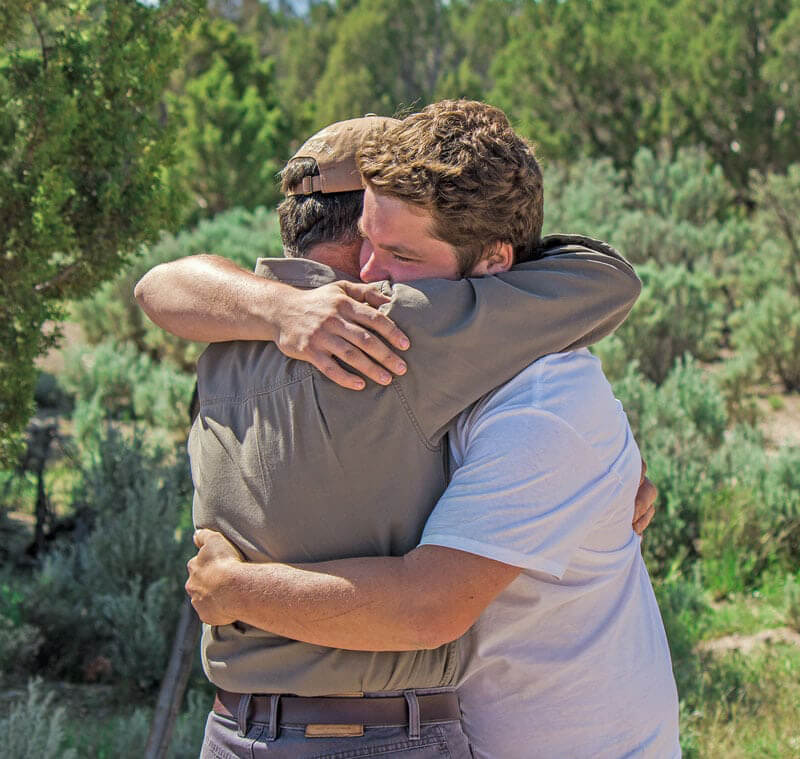
It can be challenging for parents who have an at-risk youth in their home. There can be more conflict that interrupts the family routine. This conflict often causes a constant feeling of walking on eggshells. Parents do anything to avoid sparking another argument with their struggling teen. Parents often wait to address these issues until things progress to a boiling point. But, parents don’t have to wait until the situation is out of control. With proper interventions and treatment, there is hope. Your home can once again become a happy place, filled with trust and healthy relationships. Credible treatment options like wilderness therapy incorporate several methods to help at-risk youth. You can find peace in your family by helping your child increase their self-efficacy and better understand themselves. These increases translate positively into their home life and give you peace of mind as a parent. It helps to know that you did everything that you could to keep your child safe and their future bright.
Common Behaviors of At-Risk Youth
If your child’s behavior takes a negative turn, it may be a sign that something bigger is going on. Every teenager is different, but there are some delinquent behaviors that parents and educators can use as indicators. Frequent absences from school, leading to suspension or expulsion, history of abuse or trauma, and drug use are some examples of apparent signs. Other common behaviors are not as easy to identify, yet they are just as prevalent. It can be critical to identify that your child needs help. Underdeveloped reading skills, isolating behaviors, and lying to parents are some examples.
What is essential to recognize is that some at-risk youth internalize their emotions while others express their feelings externally. Those who internalize emotions often have negative self-talk, low self-esteem, and a distorted view of themselves. It can be challenging for parents to watch their child suffer in this way. It can seem that no matter how many positive things you say to them, they cannot be happy with themselves.
On the other hand, some troubled teens express their feelings externally. These children often have frequent outbursts of anger towards family members. They can become resistant to anything that a parent suggests. This resistance can leave the parent feeling helpless. Both internal and external expressions of dysregulated emotions are warning signs for parents. They could be an indication to seek professional help.
20 Signs Your At-Risk Youth Needs Help
If your teen exhibits more than 4 of the following, they could be at risk for some of the outcomes previously discussed. These can be detrimental to at-risk teens and their long-term success and health.
Common External Behavior Problems of At-Risk Teens:
- Experimenting with substances or having a substance abuse problem.
- Being verbally abusive to those around him or her
- Bad peer group association
- A struggle with basic rules and expectations
- Disrupted school year: school suspension, expulsion, truancy or drop in grades
- Problems with the law, sometimes requiring court intervention
- A parent is ‘walking on eggshells’ when speaking with the youth to avoid conflict
- Sexual promiscuity and/or risky sexual behaviors
- Manipulative or deceitful behavior
- Stealing from family or others
- Lying about their whereabouts or activities
Common Internal Struggles of At-Risk Teens:
- Difficulty motivating the youth to do household chores and homework
- Contemplating dropping out of high school
- Suicidal thoughts or behaviors
- Loss of interest in former hobbies, activities, or friendships
- Depression or withdrawal from others
- Isolation from family and friends
- Change in personal hygiene or appearance
- Lack of motivation
- Poor self-esteem
- Severe contempt for self or others
- Struggle with a mental illness
Factors Contributing to a Youth At-Risk
Teens can find themselves in the at-risk youth category due to a variety of factors, including:
- An underlying mental health diagnosis
- Family conflict or stress
- Community factors
Examining the contributing factors to youth being at-risk can help to determine the best course of action for you as parents.
Personal Factors Contributing to an At-Risk Youth
Individual diagnoses can contribute to youth being at-risk. A teen diagnosed with depression may be more at risk for suicidal thoughts. Similarly, a teen diagnosed with a personality or mood disorder may be more at risk for verbal or physical outbursts. A recent trauma a teen may have experienced, such as the death of a loved one or a disruptive life event may also be a contributing factor. It is also essential to know that teens can find themselves at-risk regardless of their background. Sex, race, religion, education, economic status, gender identity, and sexual orientation do not exclude any teen from being at-risk.
Family Risk Factors Contributing to an At-Risk Youth
Teens can also be at-risk because of family risk factors outside of their control. These sometimes include divorce, financial hardships, family dysfunction, and parents who struggle with mental health conditions. These factors can put undue pressures on developing teens and can contribute to problematic behaviors
Community Risk Factors Contributing to an At-Risk Youth
Teens can be at-risk on a community level for many reasons. When they fall in with the wrong friend group, they experience bullying, are exposed to pressures of social media, and succumb to peer pressure. Youth at-risk is becoming an increasing problem in the United States. It can be hard for parents to know when it is time to seek counseling and professional help for your at-risk teen. Treatment programs vary in their measurement of what precisely an at-risk youth is. If your teen exhibits the above behaviors, they could be at risk for some of the outcomes previously discussed. These can be detrimental to their long-term health and success. The positive results of youth empowerment programs are improved social skills, improved behavior, increased academic achievement, increased self-esteem, and increased self-efficacy.
Help for Families With At-Risk Youth
It can be challenging for parents who have an at-risk youth in their home. There is almost always an increase in conflict. This conflict interrupts the family routine and harmony. It can be uncomfortable for parents when they try to avoid sparking an argument with their struggling teen.
Living in such an environment is not sustainable, nor is it healthy for anyone involved. This problem should be addressed sooner rather than later. With proper intervention and treatment, there is hope. Your home can once again become a happy place. It can be filled with trust and healthy relationships. Credible treatment options, such as wilderness therapy, incorporate several methods to help your at-risk youth strengthen their self-efficacy and understanding of themselves. These results translate positively into their home life and also to your peace of mind.

Wilderness Programs For Troubled Youth
Wilderness therapy addresses many of the behavioral outcomes present in at-risk youth. Furthermore, wilderness therapy is effective at getting to the root cause of problem behaviors, rather than just treating symptoms. Wilderness therapy can increase self-efficacy, self-esteem, and problem-solving skills. Students in wilderness therapy programs often report decreased levels of depression and anxiety.
Conclusion
A teen can be at-risk for a variety of reasons. However, regardless of the cause or individual circumstance, it is always extremely heartbreaking and challenging for parents to have an at-risk teen in their family. As a result, many parents feel overwhelmed about how they can best help their teens. However, the road to recovery for your loved one begins with identifying your ‘at-risk’ teen, then seeking out the help they need.
Credible wilderness therapy programs, such as RedCliff Ascent, can provide you with peace of mind. Knowing your teen will be on a better path to health and long-term success. They achieve this by increasing at-risk youth’s self-efficacy and confidence. They can help him, or her, overcome the negative aspects of their life that have dragged them down.
With proper support and care, your teen and your family can emerge happier and healthier than ever before. Call RedCliff today to get your teen and your family the peace they need.
You Are Not Alone
RedCliff Ascent is there for you and your family.
About RedCliff Ascent Wilderness Therapy Program
RedCliff Ascent offers safe, effective, and clinically-sophisticated options to treat troubled young adults and teenagers.
RedCliff Ascent’s Wilderness Adventure Therapy program was uniquely crafted to assist students and their families in creating lasting, life-long emotional changes through compassionate, intentional, research-backed, and safe outdoor adventure therapy programs. The professionals at RedCliff Ascent understand individuals don’t come with instructions, and every student is unique, capable, and amazing in their own right.
RedCliff Ascent focuses on helping at-risk youth and young adults and their families through difficulties that occur when various behavioral, cognitive, or developmental issues are present. Research shows that engaging individuals on a personal level with strategic and intentional activities will aid in developing the tools and skills necessary to engage life in a healthy and positive way.
Is RedCliff Ascent The Right Fit?
We’ll help you explore your options and guide you through the process.
Additional References
- The Effectiveness of Adventure Therapy
- DeAngelis, Tori. “Therapy Gone Wild.” American Psychological Association.A Vol 44, No. 8. September 2013. Web. 10 December 2015.
- Moore, Kristin Anderson, Ph.D. “Defining the Term “At Risk.”” Child Trends. Publication #2006-12. October 2006. Web. 8 December 2015.
- At-Risk Youth: A Comparative Response for Counselors, Teachers, Psychologists, and Human Service Professionals.
- McWhirter, J., McWhirter, Benedict, McWhirter, Ellen, McWhirter, Robert. “At Risk Youth.” Cengage Learning. Feb 9, 2012. Web. 8 December 2015. Page 17.
- Bandura, A. (1986). Social foundations of thought and action: A social cognitive theory. Englewood Cliffs, NJ: Prentice-Hall.
- Sara Wells, M., Widmer, M. A. and Kelly McCoy, J. (2004), Grubs and Grasshoppers: Challenge-Based Recreation and the Collective Efficacy of Families with At-Risk Youth. Family Relations, 53: 326–333. doi: 10.1111/j.0197- 6664.2003.0009.x
- Youth Risk Behaviors – Difference Between Boys and Girls
- At-Risk Youth Statistics